

Healthy promise

Fall 2024 California Bountiful magazine
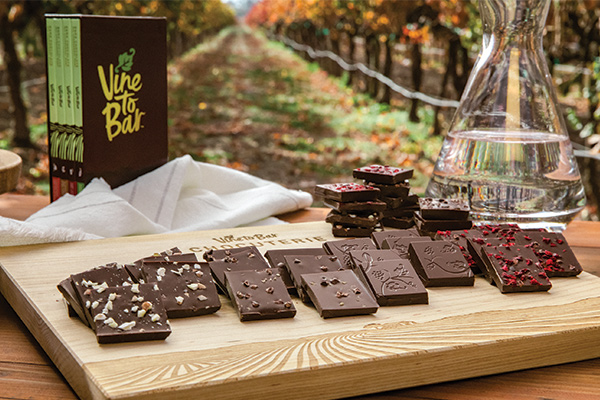
Winemaking byproduct and chocolate meet in good-for-you treats
Story by Jolaine Collins
Digging deep into the pulpy pomace of crushed chardonnay grapes, a Northern California company has discovered that the naturally occurring compounds found in these leftover grape skins, seeds and stems not only have potential health benefits, but can also add bright, new flavors to dark chocolate.
The sweet bonus: New, commercial uses for grape pomace means more earth-friendly options for how wineries deal with this viticultural byproduct, which is typically upcycled as livestock feed, vineyard compost or mulch.
California wineries deal with millions of tons of pomace left over each year, with 2 to 3 tons of pomace produced for every 10 tons of winegrapes crushed for juice.

The seed of an idea
Armed with research showing that grape seeds and skins are rich in antioxidants known to fight cancer and inflammation, two Sonoma County wine business veterans and longtime friends joined forces to determine potential food applications for grape pomace. Peggy Furth, former owner of Chalk Hill Winery, and Barbara Banke, chairman and owner of Jackson Family Wines, consider the pulpy byproduct of winemaking an underutilized winery asset.
Together they founded Sonomaceuticals and funded a study by the University of California, Davis, and the U.S. Department of Agriculture’s Agricultural Research Service to explore the nutritional content of grape pomace—referred to as marc by the company—and its value as a functional food ingredient.
The team’s research was built on prior studies of naturally occurring polyphenols—including flavonoids found in fruit, tea, wine and cocoa—that have been shown to have cancer-fighting antioxidants and anti-inflammatory properties. Their research concluded that chardonnay marc has especially high levels of beneficial flavonoids, as well as oigosaccharides, a source of prebiotic fiber that may help maintain a healthy gut.
“Once the research showed that chardonnay marc has the best health benefits of the eight grape varieties studied, we began exploring how this winemaking byproduct could be upcycled and used as a food ingredient or dietary supplement to support human health,” Furth says.
There are myriad reasons to divert pomace from the compost pile. Considering only chardonnay, nearly 653,000 tons of the grape variety were processed in California in 2023. Given that 20% to 30% becomes a winemaking byproduct, wineries were left to deal with about 163,000 tons of chardonnay pomace during that year alone.
“We see the potential of using chardonnay marc as a valuable, plant-based, natural food ingredient that offers health, sensory and sustainability benefits,” Furth adds.
Using chardonnay marc from grapes crushed by Jackson Family Wines for its flagship wine variety, the team set out to determine how the pulpy residue could be turned into a food-grade powder.
“We took all of the chardonnay grape byproduct that came out of the wine press and engineered a way to dry it without ridding it of its health properties or creating new waste,” says Scott Forsberg, chief operating officer of WholeVine Products, an offshoot of Sonomaceuticals.
After much experimentation, the company created a process to dry, press and mill the marc to make a naturally sweet, alcohol-free powder rich in antioxidants and fiber.
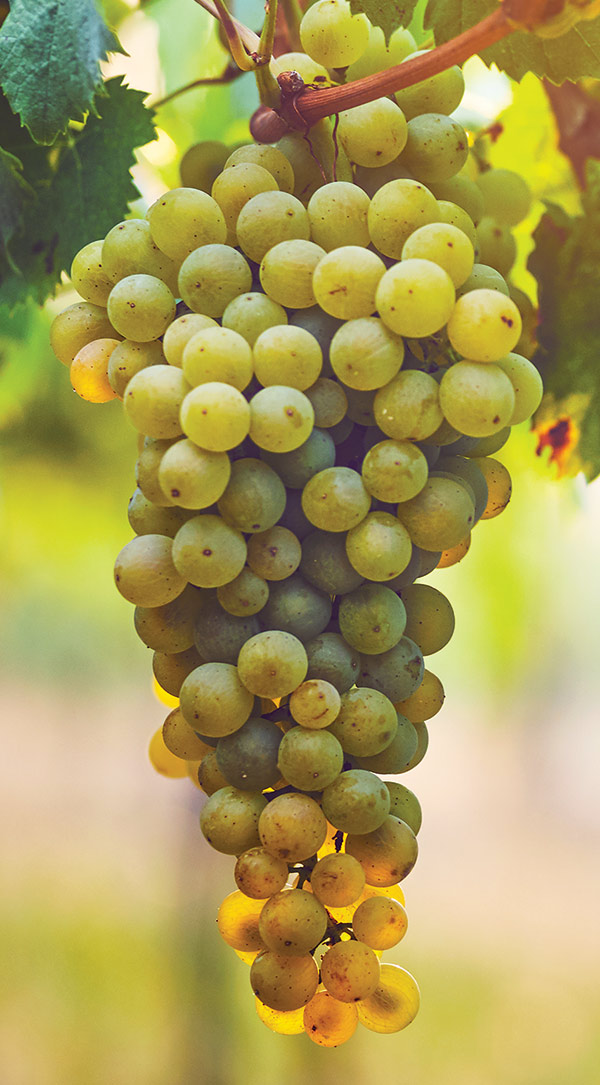
Chardonnay meets cocoa
Combining chardonnay marc powder with cocoa powder seemed like a natural pairing to the team at Sonomaceuticals, given that cocoa flavanols have also been linked to heart health. The result: a first-of-its-kind line of dark chocolate products made with 65% cocoa and 15% chardonnay marc, sold under the brand name Vine to Bar.
Introduced in 2022, Vine to Bar offerings include four flavors of dark chocolate bars and two types of dark chocolate-covered California almonds, all made with chardonnay marc. One Vine to Bar treat features cocoa nibs and a light sprinkling of salt that’s been smoked over chardonnay wine barrel staves, adding subtle smoky notes to the chocolate.
“The natural sweetness of the chardonnay marc tempers the bitterness of flavanols in dark chocolate,” explains Ed Klein, managing director of Vine to Bar in Healdsburg. “The fruity, floral notes of dark chocolate are enhanced by adding the complex flavors of chardonnay marc.”
He says Vine to Bar products, which are sold online, in winery tasting rooms and by retailers throughout California, contain more than 200 mg of flavanols per serving, a complex and diverse array of beneficial polyphenols and twice the fiber of leading brands of chocolate.

Thinking differently
“At the end of the day we’ve come up with premium dark chocolate that is better for you by reimagining a winemaking byproduct as a new superfood,” Klein says. “Winemakers and farmers have a zero-waste mindset. They’re looking for ways to upcycle winemaking byproducts. We’re looking to do the same.”
In addition to dark chocolate products, the company introduced WellVine, a powdered dietary supplement containing chardonnay marc, to the marketplace earlier this year. The powder serves as a nutrient-boosting supplement in blended beverages. Other products are in the research and development stage.
These new applications for grape pomace could be the start of much larger innovations for dealing with a major viticultural byproduct.
“We’re using an underutilized byproduct of winemaking as a model for developing future ingredients in a sustainable way,” Furth says.
“New applications offer a holistic approach to viticulture,” she adds. “They can be the genesis for how the wine industry considers pomace a renewable resource. We are a startup demonstrating a new model, and there are miles to go to scale up.
“For now, we are smashing the chardonnay code, learning that what’s in the grapes can be good for human health.”
Says Klein, “It’s good for the palate and the planet. Who knew sustainability could taste so good?”
Pondering pomace
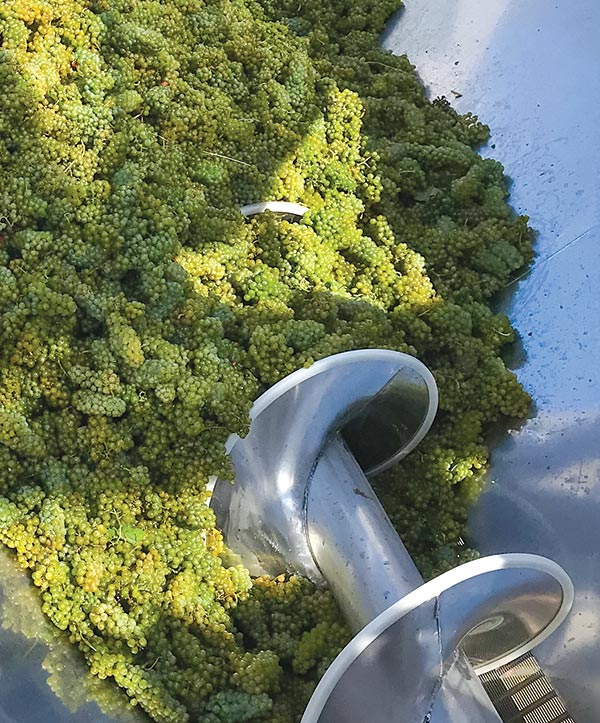
Pomace, or marc, is the pulpy byproduct of fruits such as grapes, apples and olives that remains after the fruit is crushed and pressed.
Grape pomace makes up the largest underutilized byproduct of winemaking. In 2023, nearly 3.9 million tons of grapes were crushed at California wineries, producing about 975,000 tons of pomace.
“One way the wine industry applies beneficial uses for its byproducts is by recycling pomace, which can be reintegrated into vineyard soils or composted for mulch,” says Natalie Collins, president of the California Association of Winegrape Growers.
A 2022 report by the California Sustainable Winegrowing Alliance shows that, in 2022, nearly 60% of its wineries reported that they compost pomace onsite for re-use in their vineyards or landscaping.
MORE ONLINE: If you missed the California Bountiful TV segment on Vine to Bar, you can catch it here.





.svg.png)
