

A savory surprise
Fall 2025 California Bountiful magazine
Today’s Brussels sprouts are winning new fans, delighting old ones
Story by Linda DuBois
Photos by Richard Green
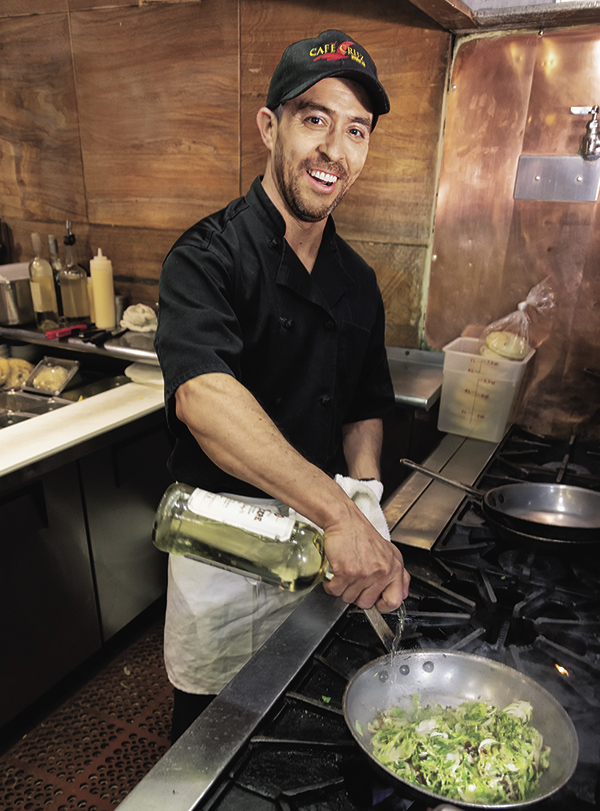
Cesar Palomino Sedano, chef at Café Cruz Rosticceria & Bar in Soquel, gets a kick out of diners’ mixed reactions when he asks them to sample the restaurant’s Brussels sprouts.
Some are eager to dig right in, and others are reluctant. But those who are wary of this cruciferous vegetable—closely related to cabbage—often are pleasantly surprised when they try them.
“They’ll say, ‘Wow! I’m actually eating Brussels sprouts—and I like them!’” Sedano says with a laugh.
This reaction often comes from adults, middle-aged or older, who remember being forced to choke down bitter, boiled Brussels sprouts as children and haven’t touched them since.
That means they’ve missed out on trying today’s newer varieties, known for being sweeter and less bitter than those they ate as kids.
About 30 years ago, a Dutch scientist first identified the chemicals, called glucosinolates, that made Brussels sprouts bitter, and breeders began working to produce sweeter varieties. The early results were tasty but low yielding. So, they crossed them with more prolific plants until they created varieties that produced sweet sprouts with decent yields. Those are the varieties commonly grown today.

Cooking method matters
During the past few years, chefs have also developed recipes and cooking methods that make a huge difference in Brussels sprouts’ end flavor, Sedano says.
“There are a lot of ways you could do Brussels sprouts,” he says. “All you have to do is put your imagination to it and come up with something and put it out there, and most of the time people will really like it.”
Brussels sprouts have been on Café Cruz’s menu one way or another for the 10 years he’s worked there.
He uses them year-round, raw and roasted, as an appetizer, as a vegetable side dish, in salads and to accent fish specials and other dishes.
“For a side, we usually just put on a little olive oil, salt, pepper and garlic and roast them just like that, and they come out really nice,” he says. Other times, he’ll toss them with reduced balsamic that’s “almost like a syrup.”
While Sedano enjoys Brussels sprouts now, he didn’t care for them until he worked at Café Cruz and Steve Wilson, the former owner, came up with the idea to pair Brussels sprouts with bacon, he says.
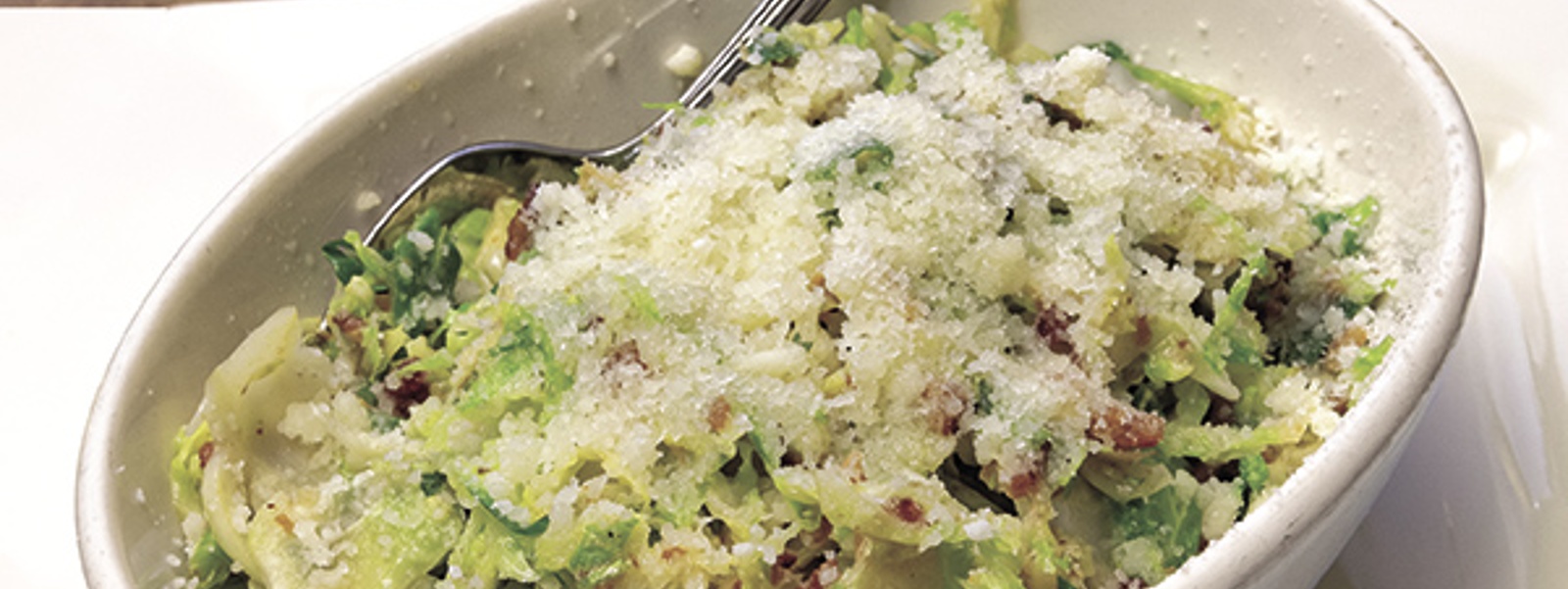
The resulting dish “was a hit,” he says, noting that the shaved Brussels sprouts, bacon and Parmesan cheese is one of the restaurant’s most popular appetizers. The sprouts are added to a mixture of sautéed bacon bits, garlic, white wine, butter and Parmesan cheese and then served al dente.
Large farming family
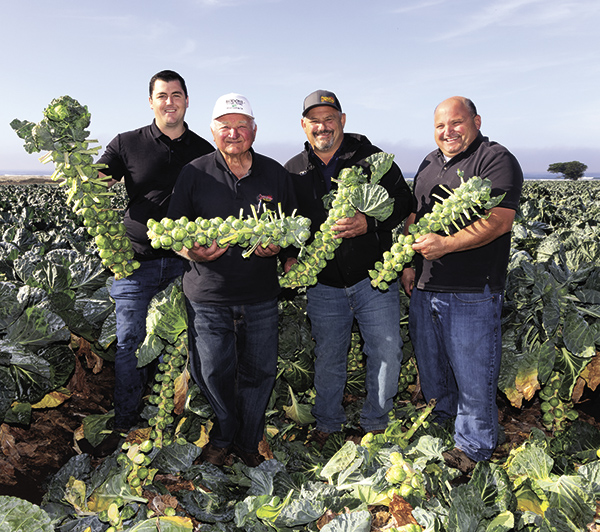
The restaurant’s go-to source for fresh Brussels sprouts from September through December is Santa Cruz-based Rodoni Farms, run by Billy Rodoni and his father, Mario. They are among a large farming family descended from Italian immigrant Dante Rodoni, who started growing Brussels sprouts in Santa Cruz in 1935.
“They’re a family-owned business and very nice people,” Sedano says. “We can get them from other suppliers if they aren’t in season there, but we really prefer the ones from Rodoni Farms. They’re always nice and clean, and their flavor is just really, really great.”
The farm’s two primary varieties are Confidant and Gigantus, both sweet, “good-eating” varieties, Billy Rodoni says. While most of their Brussels sprouts are distributed throughout the United States and Canada, they reserve some for local restaurants, including for their weekly deliveries to Café Cruz.
Billy says they began delivering to Café Cruz simply because they were fans. “We enjoy eating at their restaurant, and we wanted to supply them with fresh Brussels sprouts,” he says.
Rodoni Farms is one of six family-run operations under the Sunset Farms umbrella, with land stretching from Santa Cruz to Ventura.
Billy’s cousin Alex Rodoni and uncle Stephen Rodoni manage Springfield Farms—the largest of the family’s operations—with land in Moss Landing, Morro Bay and Ventura. Other family members—Dan, Mario, Elio and Robert Rodoni—run farms under the Sunset name in Santa Cruz and Moss Landing.
Growth to meet demand
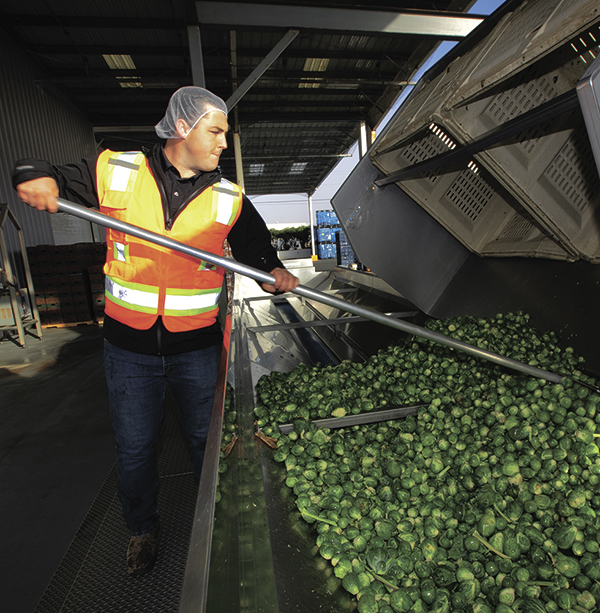
The farms grow multiple crops, and all six cultivate Brussels sprouts. They originally grew them exclusively on the Central Coast until a spike in demand around 2014.
“That’s when we looked at how we could become a year-round producer in California and added a Ventura County farm,” says Alex Rodoni. Springfield Farms now grows seven varieties for the fresh and frozen markets, harvesting from July through January in Monterey and Santa Cruz counties; May through November in San Luis Obispo County; and late January through mid-June in Ventura County.
Alex Rodoni says the rising demand plateaued around 2021 but has remained strong, especially during the holiday season. “It averages out to about an 80% uptick for us during November and December,” he says.
That’s also when Brussels sprouts tend to taste best, he says. “There are certain varieties that we plant at certain times of year based on how those varieties hold up in those weather patterns,” he adds. “The biggest factor in taste tends to be temperature. They taste the sweetest when it’s coldest when they’re harvested. Over the summertime, they tend to get a little more bitter.”

They enjoy good weather
Production also varies with the weather, since heavy rains and unseasonably hot or cold spells can reduce yields.
Last year, yields in Ventura dropped significantly because of unusually wet weather and a common pest—Diamondback moth larvae—which is worse in the warmer Southern California climate. This year, however, has been much better.
“Weather and pest pressure have been manageable, which is something we haven’t been able to say for a long time,” Alex Rodoni says.
The Central Coast has ideal conditions for growing Brussels sprouts, with moderate temperatures and moist, well-drained, medium to heavy soil.
“I would say about 40 to 80 degrees is their temperature point, but it also depends on their stage of growth,” he says. Young plants tolerate heat well, “but as they get older, the milder the temperature you have, the better. … Their sweet spot is having about a 10- to 12-degree temperature swing. That’s when they grow the best.”
They take their time
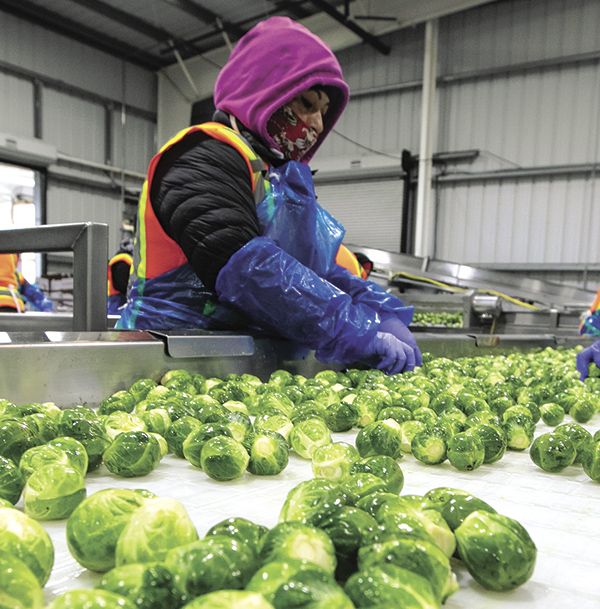
Brussels sprouts are a slow-growing crop. Depending on the time of year and variety, they stay in the nursery for 45 to 70 days before growing in the field for 175 to 200 days. Because the crop is in the ground for so long, there’s a greater chance for weather or pests to affect yields.
Alex Rodoni says the slow cycle requires planning far ahead, often a year in advance, which makes it tricky to balance supply with demand.
Due to all the variables, the profit margin for Brussels sprouts is typically “slim” but sustainable, he adds. He says he’s optimistic the market will stay strong for the foreseeable future.
His biggest hope is that more people will start viewing Brussels sprouts as an everyday vegetable and not just a holiday item.
“We hope there’s a sustainable balance where we don’t see waves of influx and decrease throughout the year,” he says.
Farmers benefitting from trendiness
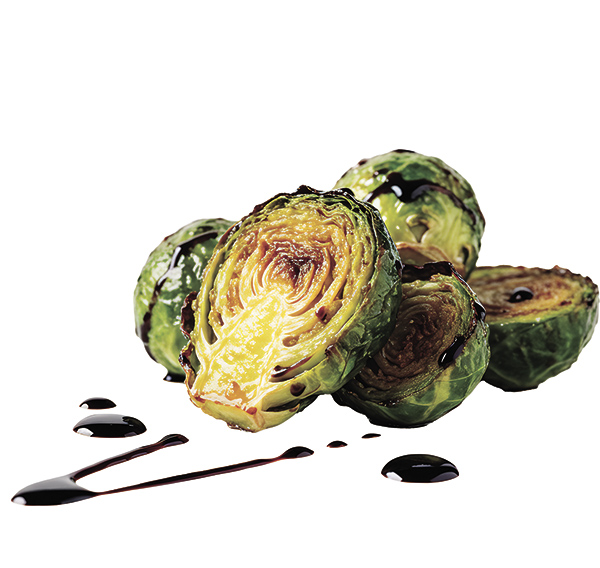
Once overlooked, Brussels sprouts have taken social media and restaurant menus by storm in recent years—and California farmers are reaping the rewards.
“The market’s really grown, especially the fresh market, and a lot of that has to do with the food shows on TV and chefs’ artistic abilities. It’s really put Brussels sprouts on the map,” says vegetable grower Jeff Hitchcock, majority owner of Hitchcock Farms in Salinas.
The initial 25 acres he planted in 2014 has grown to 500 acres in Monterey County, 300 in San Mateo County and 250 in Mexico to accommodate year-round production.
Also a packer and shipper of fresh produce, Hitchcock says his company’s Brussels sprout business has “evolved immensely in 10 years,” now selling millions of cartons a year to processors and other buyers. The sprouts ultimately end up on retail grocery shelves and in restaurants across the country.
“People really didn’t know how to cook them before, but now, with all these food shows, chefs are showing the public, ‘This is what you do with a Brussels sprout,’” Hitchcock says.
“When I go to restaurants, I always order the Brussels sprouts, just because I want to see how creative the chef is with them and if I can learn something different for when I cook them at home,” he adds.
Alex Rodoni of Springfield Farms has also noticed the trend and expanded production to meet demand.
“I think people have been looking for healthier ways of eating and more exciting things to eat,” he says. “Brussels sprouts are just one of those things that kind of got picked up with that trend—and we’re hoping to see it continue.”





.svg.png)
