

Long time growing
July/August 2023 California Bountiful magazine
Family’s river delta farm
marks 175th anniversary
Story by Kevin Hecteman
Photos by Fred Greaves
1848 was quite the year in California history. James Marshall found gold near a sawmill in Coloma, setting off the Gold Rush. The Treaty of Guadalupe Hidalgo, which ended the Mexican-American War, transferred Alta California from Mexico to the U.S. And along the Sacramento River, south of the town that became the state capital six years later, the Peck and Bates families settled down to farm the rich, fertile soil.
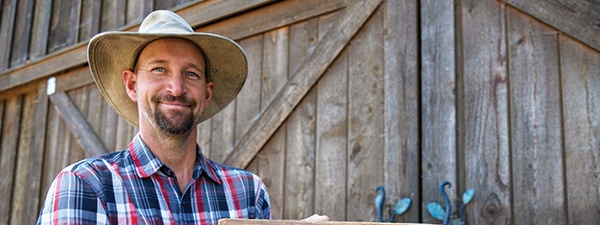
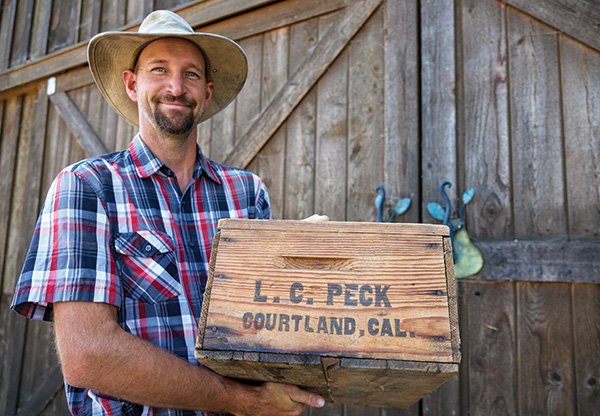
“They came out here for the Gold Rush,” says Mike Neuharth, the sixth generation to farm at Steamboat Acres, “and were like, ‘Well, guess what? There’s no gold out here, but we’re farmers where we’ve been from historically. Let’s just keep that going.’”
The delta was a very different place 175 years ago.
“When they first got here, there was nothing here,” Neuharth says. As to what the Pecks and their neighbors raised in the soil, “everyone was growing asparagus and sugar beets, and did that for a long, long time.”
Along the way, one of the generations made a decision that’s still bearing fruit—literally and figuratively—for Neuharth today.
“I don’t remember who decided it would be a good idea to plant pear trees, but they did,” Neuharth says. “Our pear orchards have been what’s been carrying our business. They’re what’s providing our bread and butter.” Keeping them through farming’s ups and downs, he adds, “was the smart decision.”
Also paying off is a decision his father, Tim, made about 20 years ago: converting the farm to organic production.
“Getting that fresh market value out of the crop rather than the cannery crop, has been quintessential in keeping our heads above water,” Neuharth says.
Long time growing
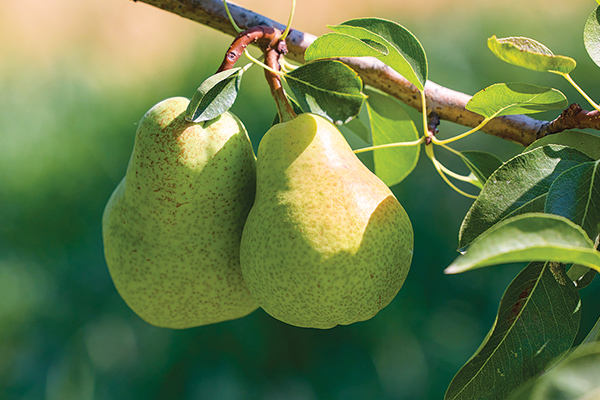
Some of those pear trees have seen a day or two. Among Neuharth’s pear trees are some that were planted in about 1888.
Yes, 1888. As in 135 years ago.
“Lots of water, good pruning and just really paying attention, keeping after it all the time, keeping your pest problems down,” is how Neuharth describes the work needed to keep these arboreal centenarians in production.
And here’s the kicker: He may retire before the trees do. A while back, he says, he asked a neighbor about a pear tree’s life expectancy and was told about 160 years.
“The joke among pear farmers is, you don’t plant pear trees for you—you plant pear trees for your kids,” Neuharth says.
As with the family itself, the next generation of trees is already growing. Neuharth says the 135-year-old trees are spaced about 20 feet apart, and he’s planted newer trees among the elders.
“When those really old trees die,” Neuharth says, “at least there’s a tree there that’s taking up some of that slack.”
Center of the pear universe
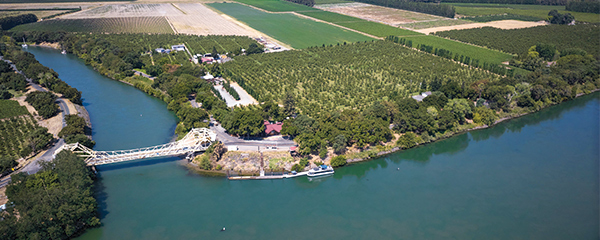
Steamboat Acres sits on 300 acres near Steamboat Slough, just down and across the river from the delta towns of Courtland and Paintersville, the latter of which no longer exists. Courtland is at the heart of Sacramento River delta pear country. The county produced just more than 5,000 acres of pears in 2021, according to the Sacramento County crop report.
The oblong fruit is celebrated annually with the Pear Fair, which has taken place in Courtland the last Sunday of July since 1972 (although the COVID-19 pandemic necessitated a two-year hiatus). The fair features, among other things, a breakfast with pear mimosas, pear pie-eating contests, live music, historical exhibits and, of course, pears for sale.
Neuharth says he’s been taking a break from the fair in recent times but is thinking of getting back into it.
“People come from all over for the fair,” he says. “People are really, really happy and excited to know that there’s a certified (organic) grower out here doing it that way.”
So excited that he goes home with laryngitis.
“(I) pretty much don’t have a voice after the Pear Fair because I’ve educated so many people about how long it takes to grow pears and where they come from, and where they originated, and what we’re doing,” Neuharth says.
The fair coincides with the harvest of Bartlett pears, the variety most prevalent at Steamboat Acres. Neuharth says harvest generally begins the second or third week of July and runs two to three weeks. To ensure they reach market in ideal condition, Neuharth picks pears while they’re still green.
“Everybody thinks you pick them yellow,” Neuharth says, which is a bad idea because they’ll go bad before they get to the store. “Over the course of time, going from our farm to the packinghouse and then from the packinghouse to the cold storages, and then from the cold storages to the stores, they start to ripen a little bit over time.”
Growing a legacy
Steamboat Acres’ longevity has not gone unnoticed. In July 2022, at the California State Fair, the California Agricultural Heritage Club recognized Steamboat Acres among the farms and county Farm Bureaus that have been in operation for a century or longer. The California Farm Bureau is a sponsor of the club; Neuharth is on the board of directors of the Sacramento County Farm Bureau.
Pears aren’t Neuharth’s only game. He also grows wheat, safflower and alfalfa, along with cherries. His farm once ran a pumpkin patch and grew organic vegetables.
Even while looking to the future, Neuharth is mindful of those who came before and, to borrow a sports saying, left it all on the field.
“They put their blood, sweat and tears into our farm here and these pears, and everything else we’ve done here,” Neuharth says. “There’s a huge, huge sense of responsibility.”
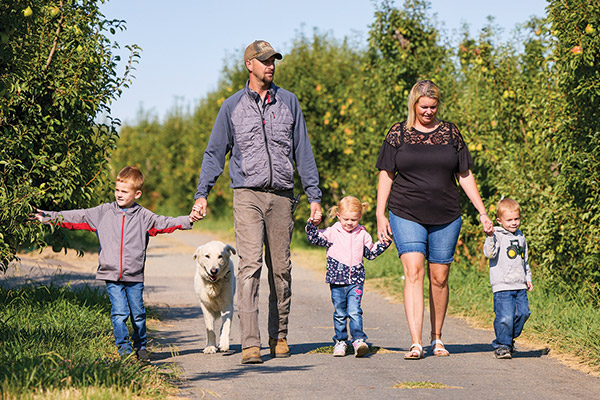
He looks to his children—son Raylan, 6, and his 4-year-old twins (she’s River, he’s Reed)—as being the up-and-coming seventh generation.
“I think it’s important that we continue to maintain what we have here—not only just for us, me personally, and the previous generations, but for the next generation,” Neuharth says. With that, he adds, comes the responsibility of teaching his successors everything they need to know to uphold what Neuharth calls “our family heritage.”
“I couldn’t be prouder,” he says. “It’s a huge sense of pride, and there’s humility in that, too. We’re really blessed with what we have here. It’s just myself and my dad and my wife. We’re just trying to be good stewards of our lands and trying to continue this on and feed the world.”
Heritage through the years

Recognizing the Pecks/Neuharths and other long-running farming families is the mission of the California Agricultural Heritage Club, part of the California State Fair.
The club was founded in 1948, the centennial of the beginning of the Gold Rush. Farming families are recognized for their decades of service to agriculture at 100, 125, 150 and 175 years. (Steamboat Acres hits the 175-year mark this year.) A breakfast honoring the year’s inductees is held each summer as part of the California State Fair at Cal Expo in Sacramento.
At the 2022 breakfast, Judy Culbertson, chair of the club and executive director of the California Foundation for Agriculture in the Classroom, noted, “As we move forward and fewer farms and ranches have family continuing on, it’s even more important that we recognize and instill the importance of people, the farms and ranches, and ag businesses in operation.”
The California Agricultural Heritage Club is sponsored in part by the California Farm Bureau and the Friends of the California State Fair. County Farm Bureaus have been honored for their longevity: The Merced and Solano County Farm Bureaus received the 100-year honor in 2022.
Growing through the years
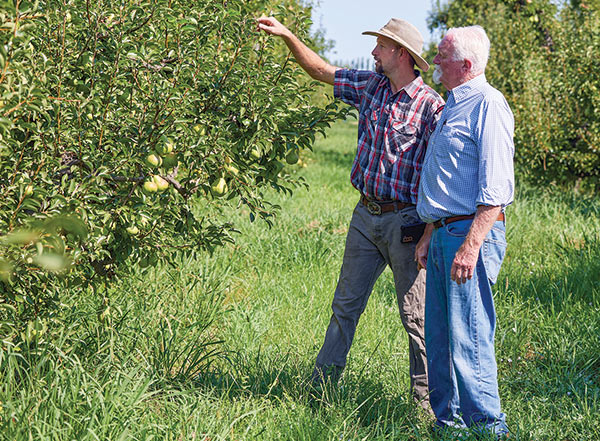
The first two generations of Steamboat Acres started the farm together in 1848, according to Mike Neuharth.
First and second generations
Benjamin Bates (1820-1897) and his wife, Jane (nee Patton) (1819-1900), helped establish what’s now Steamboat Acres along with their daughter, Mary Emma Bates Peck (1846-1900), and her husband, Archibald Jackson Peck (1828-unknown).
Third generation
Archibald’s son LeRoy Campbell Peck (1881-1958) and his wife, Berenice Frances (nee Quinn) (1894-1981), were next in line. LeRoy Peck had more than 400 acres of pears on his farm at the time of his passing, according to his obituary in the Sacramento Bee.
Fourth generation
LeRoy’s son Stanley Lowell “Bud” Peck (1920-1975) carried on the family tradition. He married Lucille J. (nee Hessler) and became the stepfather of her son from a previous marriage.
Fifth generation
That son, Tim Neuharth (born 1949), grew up to become a farmer as did his forebears. He is still active on the farm today, along with his son Mike.
Sixth generation
Mike Neuharth (born 1984) proudly carries on the farming tradition the Bates and Peck families established 175 years ago. Mike and his wife, Tara, have three children: son Raylan, age 6; daughter River, age 4; and son Reed, also 4.





.svg.png)
