

An occasion for cabbage
March/April 2023 California Bountiful magazine
Farmer explains what it takes to
grow the St. Patrick’s Day staple
Story by Linda DuBois
Photo by Gretchen Pereira
Cabbage is one of the most versatile and readily available vegetables grown in California. It’s widely consumed year-round in coleslaw, salad mixes and stir-fries, as a topping for sandwiches and tacos or as a cooked vegetable.
However, on March 17, this nutritious leafy green has a special place at the table. In the U.S. at least, corned beef with cabbage has become the iconic meal for St. Patrick’s Day.
Americans can thank California farmers for playing a major part in getting the celebration started. The Golden State grows about a quarter of the cabbage produced in the nation, according to the U.S. Department of Agriculture.
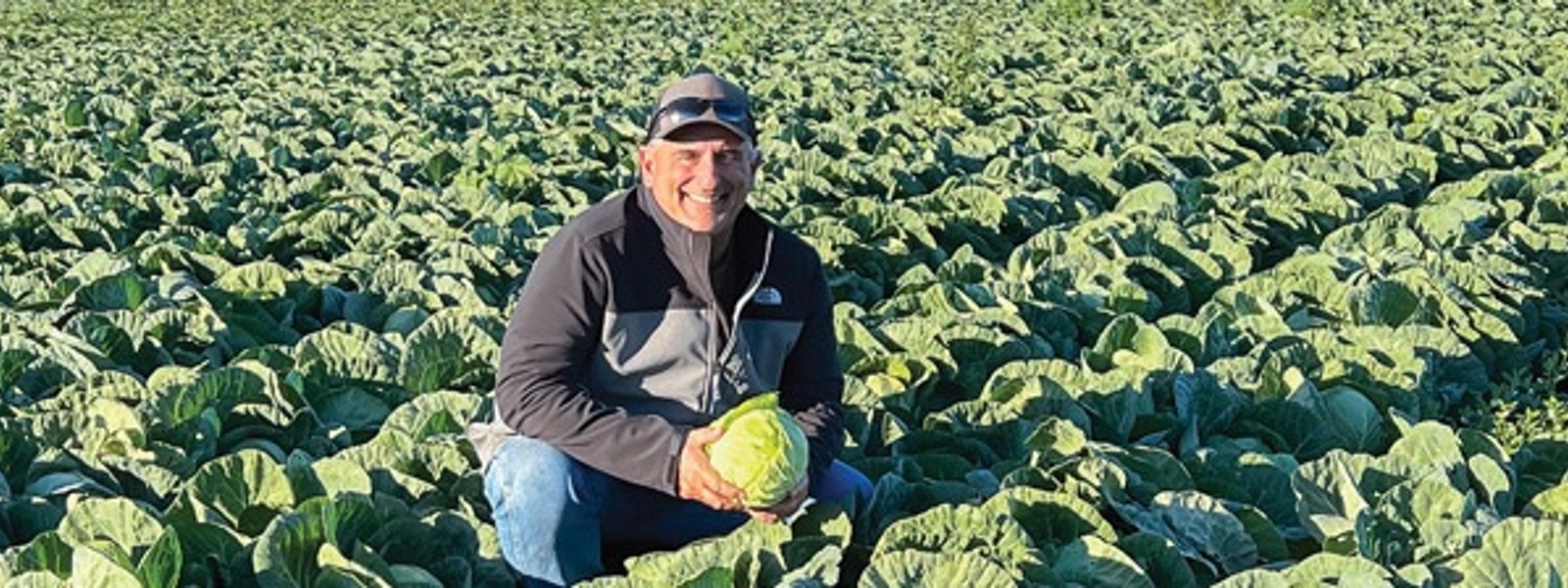
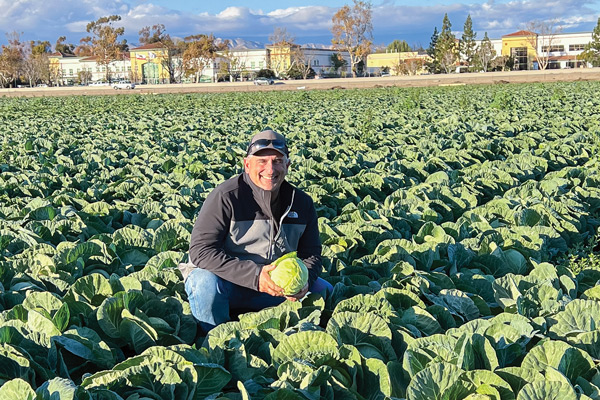
One of these growers is Danny Pereira, the general manager of Rio Farms, which harvests cabbage year-round in Ventura County and May through November in Monterey County.
Pereira knows a bit about farming. He grew up in Monterey County, working on farms summers and weekends starting at about age 11. “Just as soon as I was able to reach a clutch on a tractor, I was on one,” he says. He started working at Rio Farms in 1988.
The expertise he’s gained over the years goes into growing the perfect head of cabbage.
Cool conditions
“Temperate climates, like coastal climates, provide ideal conditions for cabbage. It’s a cool-weather crop that likes the warm days and the cool nights,” Pereira says, adding that, conversely, cabbage is not a fan of extreme heat or hard frosts. This is what makes the farm in Camarillo a perfect location. Pereira estimates Rio Farms grows about 1,100 acres of green cabbage, producing about 77 million pounds per year.
Starting out right
To give cabbage a good start in the field, land preparation is key, Pereira says. “We cultivate extensively, we use good irrigation practices and focus on good soil health—we use a lot of humic acid and carbon-based fertilizers to enhance the availability of the nutrients already in the soil, which is important to us.” Rio Farms has a sister company, King City Nursery, that grows all its plant starts over about 35 to 55 days.
Pesky pests
“Much like all crops, there are always challenges for cabbage,” Pereira says. Among them are damage from pests—especially caterpillars—as well as internal decay and tipburn. “We have a huge diamondback moth issue down here that we need to really combat. If I had to give you a big one, that would be it,” Pereira says. “Populations are more controllable (in cool months), but summertime is tough.”
Too much of a good thing?
While consumer demand for cabbage rises before St. Patrick’s Day, that doesn’t necessarily mean a windfall for farmers. “Obviously, the price is dependent on supply. A lot of times everybody has the idea, ‘Oh, I’m going to go plant 40 acres of cabbage for St. Patty’s Day—or whatever the amount may be—and if everybody’s doing that, then all of a sudden there’s a big glut of cabbage out there and the price falls,” he says.
Hand harvested
To harvest, employees go through the field with lettuce knives and hand cut every cabbage head. Then they put it onto a belt and it’s elevated into a 4-foot cardboard bin, Pereira explains. “There’s a lot of equipment out there for mechanical harvesting, but the labor required to operate the equipment and complement the mechanical harvest machines would be greater than what I have hand harvesting,” he says.
Off to the table
Most of Rio Farms’ cabbage goes to local processors that use it to make food items like coleslaw, salad mixes and eggrolls that often end up in restaurants, schools, cafeterias or hospitals. The farm ships some to the Midwest, Colorado and Texas, but a majority of it, about 60% to 70%, stays within a 50-mile radius.





.svg.png)
