

Feeding the human spirit

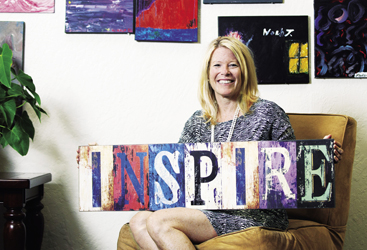
Michelle Steeb, CEO of a Sacramento women's shelter, started Plates Café & Catering with co-founder Bobbin Mulvaney. Women at the shelter created the artwork in the background.
To launch a successful restaurant is one thing; to resurrect the human spirit in the process is what Plates Café & Catering in Sacramento is all about.
Plates is the brainchild of Michelle Steeb, CEO for St. John's Shelter for Women and Children, and Bobbin Mulvaney, co-owner of a restaurant and catering company in Sacramento.
These enterprising women, who met for the first time over lunch in 2009, shared a similar vision: to help homeless mothers become self-sufficient by training them for jobs in the hospitality business.
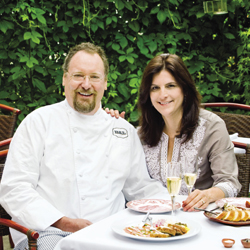
Plates co-founder Bobbin Mulvaney and her chef/husband Patrick Mulvaney are staunch supporters of the vocational program.(Courtesy of Rudy Meyers Photography)
"Children and hunger is an important issue to me," Mulvaney said. "We live in one of the richest agricultural regions in the world and there shouldn't be a child in our area whose mother is worried that there's nothing for breakfast tomorrow."
After visiting a rehabilitative program in San Francisco called Delancey Street, Steeb recognized that training formerly homeless mothers enrolled in St. John's program to work in a real restaurant would be an important component to helping them provide for their own children eventually.
"They are homeless, not helpless," she said.
Within six months of that initial meeting, Plates Café & Catering opened in an old Army commissary building, where it operates rent-free, thanks to a compassionate landlord who charges only for utilities and maintenance.
"I still don't know how we did it," Steeb said, amazed at how quickly Plates was up and running. "But we knew it was right and made it happen."
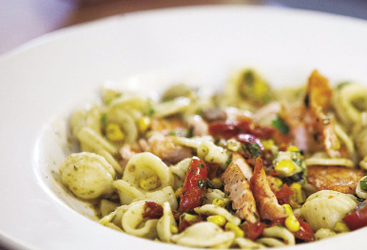
Orecchiette tossed with fresh vegetables is a popular salad on the menu.
Food that serves a purpose
True to the founders' vision, Plates is staffed by women served by St. John's who clock in an average of 600 to 1,200 hours of training in preparing, cooking and serving breakfast and lunch to patrons, as well as filling orders for catering events, which generates the majority of Plates' revenues.
While they don't earn money during their vocational training, they don't have many expenses, either. St. John's provides shelter, meals, a shuttle service and child care. Steeb said these much-needed services remove barriers to steady employment so women can focus on completing the program and finding work in hospitality in order to become self-sufficient someday.
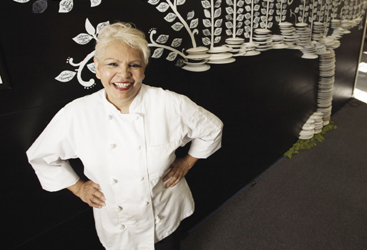
Plates sous chef Mary Scott stands next to a mural in the restaurant featuring donors' names inscribed on leaves and a trunk made from plates.
In fact, Mulvaney and her husband Patrick, a well-known Sacramento chef, have hired a number of graduates from the Plates program for their restaurants, Mulvaney's Building & Loan and Culinary Specialists Catering Co.
Plates' initial recipes were created by a chef "on loan" from the Mulvaneys. An advocate of farm-to-fork fare, he incorporated ingredients from local farmers, ranchers, dairies and bakeries into the menu.
Business has been so successful, a second location, Plates2Go, opened in Midtown Sacramento, encouraging diners to come for the food, but come back for the cause.
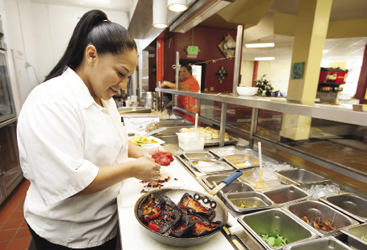
Lupe Solis, a single mother enrolled in the vocational training program at Plates, peels grilled peppers that will be used in sandwiches and salads that day.
"If you want to see change and be a part of it, then have a crouton with a conscience," Mulvaney suggested.
Empowering women
"I feel stronger than I ever have in my entire life," said 46-year-old Cynthia Bailey. In 2012, Bailey came to St. John's as a homeless mother, addicted to drugs and alcohol. Today, she is clean and sober, and life looks promising. She and her 12-year-old son recently moved into their own apartment, subsidized by the shelter. She is training at Plates as a server and to her great surprise, discovered through art classes at St. John's that she is a gifted artist.
Mary Scott, the sous chef at Plates, is another success story. In 2010, she left an abusive relationship in another part of the state, where she owned a Mexican restaurant and gas station deli, and moved into St. John's shelter to start anew.
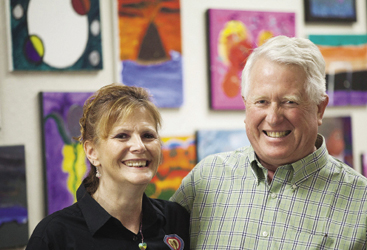
Plates server Cynthia Bailey poses with Mark Johnson, who teaches art therapy at St. John's.
After taking part in Plates' six-month vocational training, Scott, who said she felt right at home in the restaurant business, was hired as the sous chef. Now it's her job to teach other women how to cook and prepare dishes for customers.
"I never knew I had this talent," Bailey said. Her artwork hangs on a wall at Plates, along with works by other women. "This program has given me so many blessings and rewards. It empowers me and I want to keep moving forward."
"This program saved my life. Now I'm self-sufficient, renting a house and saving up to buy a condo in the area," she said.
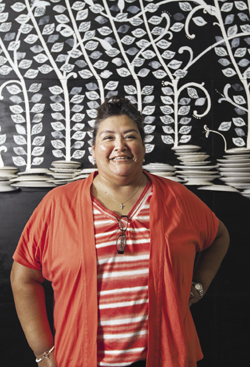
General Manager Susan Wagner supervises a staff of about 22 women.
The most rewarding part of the job, Scott said, is working with other women and sharing her life story with them.
A garden of inspiration
Right outside the Plates kitchen is a convenient source of culinary inspiration—a garden of vegetables and herbs picked daily for a number of dishes.
A rotating menu of vegetables is grown according to the season, such as tomatoes, Japanese eggplant, squash and all kinds of peppers—jalapeños, serrano and bells. They also grow a variety of herbs that would make even Simon & Garfunkel proud—parsley, tarragon, rosemary and thyme.
The thriving garden is rooted in the charity and kindness of big-hearted people. A group of Sacramento chefs pulled together to raise funds to finance it. (Many of these same chefs participate in monthly guest-chef dinners at Plates.) And Rick Boyd, a local microgreens farmer, donates his time and expertise once a month to weed, add compost and monitor the garden's drip irrigation system.
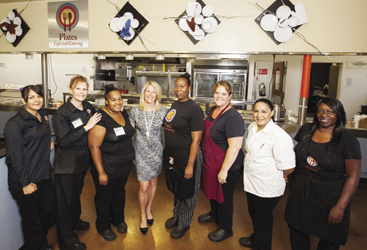
Plates co-founder Michelle Steeb poses with servers and kitchen staff. From left: Renae Ramirez, Cynthia Bailey, Janisha Bradford, Steeb, Imani O'Neal, Trina Martinez, Lupe Solis and Delisa Verdun.
"My wife and I ate here and sat outside, and saw that their garden was not very well-maintained," Boyd explained. "Since I had experience in this area, I volunteered my services and took over."
'Food is the celebration of life'
Running the daily show at Plates and Plates2Go is General Manager Susan Wagner, who is in her element. Before moving to Sacramento, Wagner managed a chain of five restaurants in the Bay Area.
"I have a big passion for this business because food is the celebration of life," she said.
Hospitality is in Wagner's blood.
"My mother's house was always the house everyone came to, and so is mine," she said.
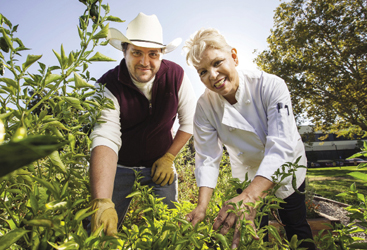
Farmer Rick Boyd, left, donates his time and expertise in the Plates garden. He and sous chef Mary Scott gather fresh ingredients for the day's meals.
Managing Plates has been a dream job for this natural-born hostess, who said she fell in love with the women immediately.
"To watch the human spirit come back to life is like watering a plant that has wilted," Wagner said.
Plates' GM said her work with the women of St. John's is similar to the seeds she plants in her own garden: "You water them and they'll grow; you nurture them and they will produce. It feels so great to be in that environment."
Lynn Armitage
info@californiabountiful.com
Sharing the bounty
California farmers and ranchers produce an abundance of fresh fruits, vegetables, nuts, meats and dairy products throughout the year. The following is a partial list of farm-related charities that have made it their mission to help ensure no one goes hungry in this agriculture-rich state:
- Ag Against Hunger: The Salinas-based organization delivers surplus produce, donated by more than 50 local farmers, to food banks and nonprofit agencies in the state. www.AgAgainstHunger.org
- Harvest for All: For the last 10 years, Farm Bureau Young Farmers & Ranchers throughout the nation have worked collaboratively with Feeding America to donate food, funds and manpower to feed more than 83 million Americans. California YF&R members donated more than 10 million pounds of food last year.
www.cfbf.com/young-farmers-ranchers#harvestforall - Farm to Family: Run by the California Association of Food Banks, the program distributes more than 200 million pounds of food each year to people in need throughout the state. The food is donated by California growers and shippers. www.cafoodbanks.org





.svg.png)
