

Raising goats, mentoring kids
September/October 2022 California Bountiful magazine
Animals help special-education
students learn about life
Story by Kevin Hecteman
Photos by Mitchell Yerxa
There’s a livestock program at Willows High School that, to its participants, is the G.O.A.T.
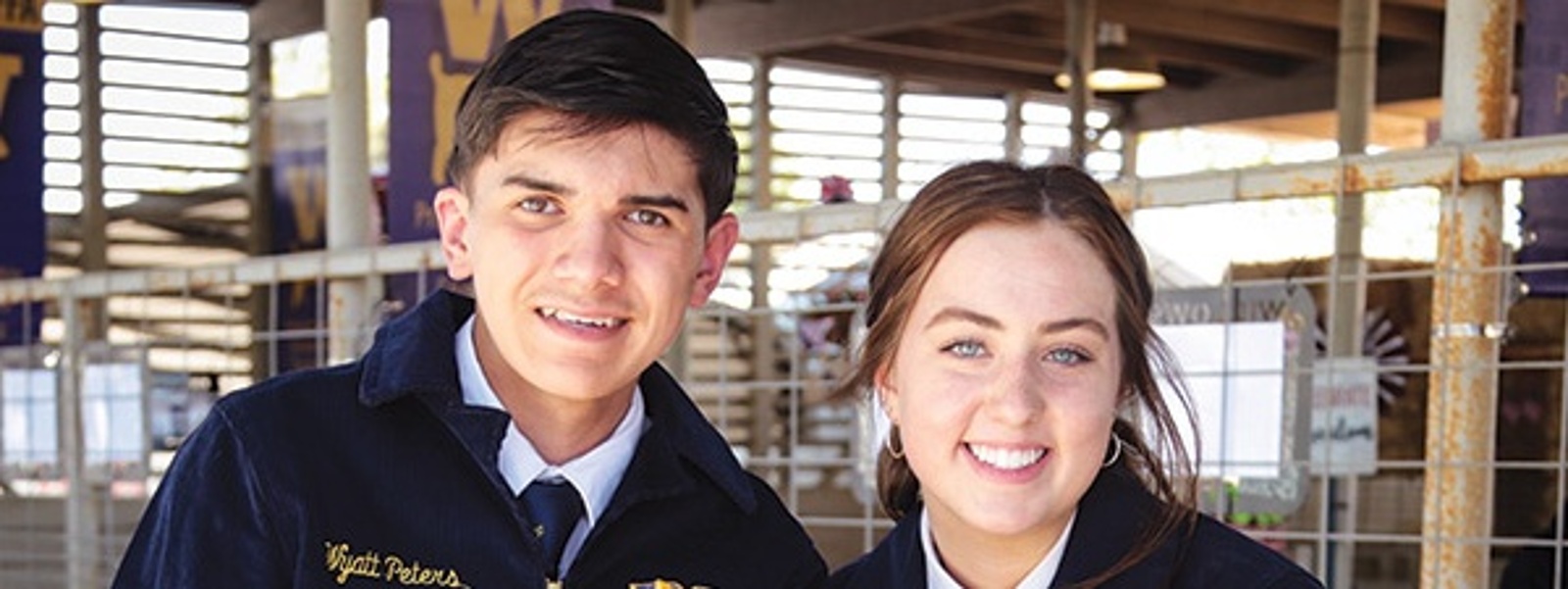
The Northern California school’s FFA chapter raises its share of animals for the fair. It also raises the skills and confidence of its special-needs students and their mentor peers, as they team up to care for goats and each other.
“This is a very rewarding program,” said Karli Lanzi, one of the program’s student mentors. “I feel that we are able to connect with the kids on a deeper level and learn a lot more about goats.”
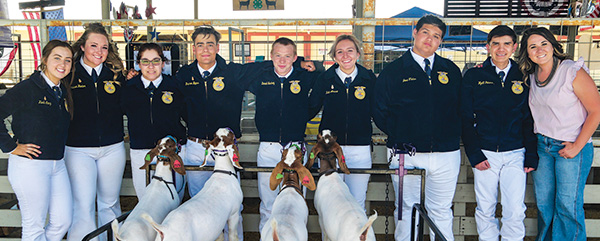
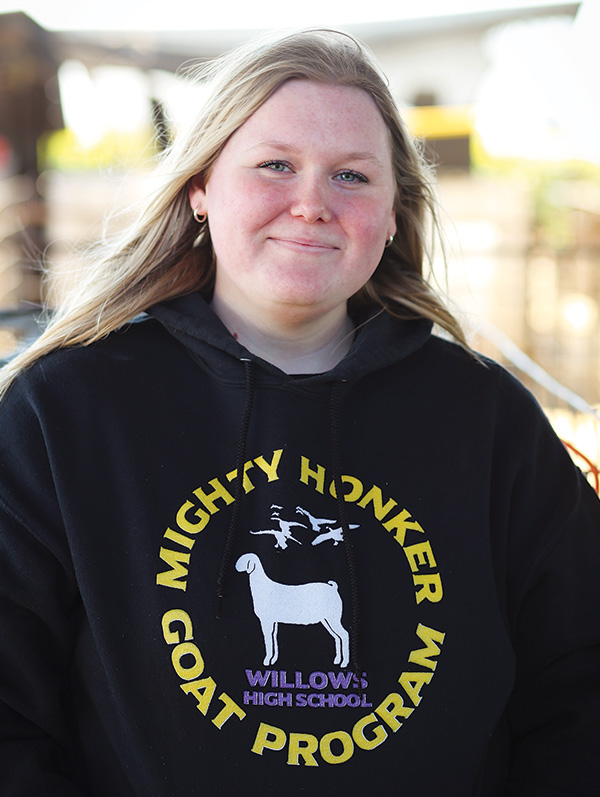
The Mighty Honker Goat Program—Honker is Willows High’s athletic nickname—pairs carefully selected mentors with special-education students. The pairs then spend several months raising a goat. When the Glenn County Fair rolls around in the spring, the student pairs and their four-legged charges hit the show ring as a team, culminating in the fair’s Junior Livestock Auction.
One of those goats last school year was Tim, and one of the people looking after him was Franny Ruiz, a 10th-grade special-education student at Willows High.
“I like playing around with animals, helping animals,” Ruiz said. Her favorite thing about Tim? “Just walking around with him and cleaning him and feeding him.”
Molly Lex, Willows High’s special-education teacher, says she likes the idea that her agriculture students “get to leave my classroom and go into a general-ed setting.”
“Normally, when I mainstream kids into general-ed classes, we send an adult with them, or some type of supervision,” Lex said. “In this sense, I don’t send anybody—they get to go to this class purely on their own. They’re with their peers and finally get to be independent.”
Origin story
The program was launched in 2017 when then-Willows High student MaKaylee Lindsey and her mother, Amy, came across a similar program in Southern California and brought the idea home. Since then, Diane Amaro—the current parent advisor—has seen all four of her children take part as mentors. Her daughter Kate, now a senior, is the student advisor.
“You would think that the special-needs kids would benefit from it,” Diane Amaro said, “but I think that the mentors almost get more out of it than they do.” She says she believes the program “makes them realize that these kids are just like everybody else, and everybody has quirks. Just because you can’t see somebody’s quirks doesn’t mean they don’t have it.”
The program was quite the learning opportunity for Ruiz’ mentor Marissa Hunter, who graduated this past spring and is looking to become a physical therapist.
“I’ve definitely learned a lot of patience and how to give my leadership on to these kids—how to teach them to be more independent and how to teach them how to have these leadership skills,” she said.
Fellow Willows graduate Etta Maben jumped in during her junior year “so I could go out and help the kids almost every day,” she said. “Seeing them happy to work with an animal, you don’t get to see a lot.”
Maben says she wants to become a speech pathologist working with children, and she credits the program with helping fine-tune her communication and collaboration skills.
“It was very important for all of us to respect each other at the end of the day,” she said, “but to be able to have and show the kids the respect and the responsibility that goes along with taking care of the animal really helped.”
Miles of smiles
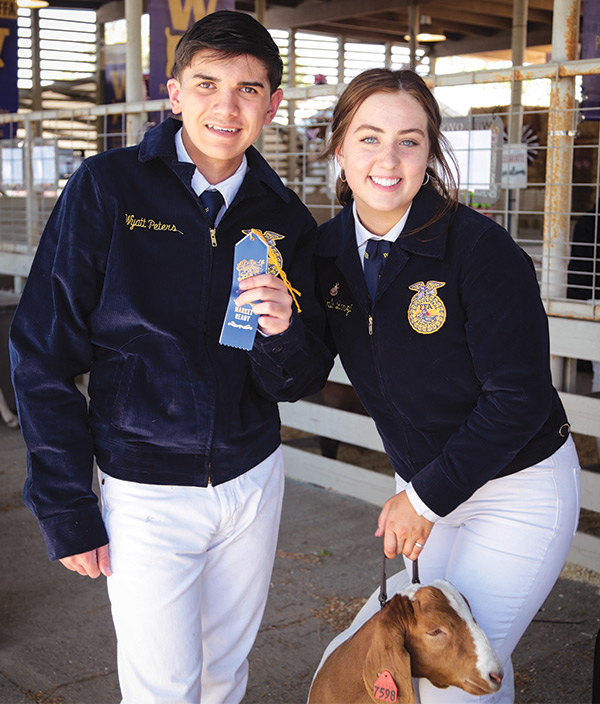
Willows junior Adam Dyck says he had a blast last spring taking care of Bob, the goat he helped raise with his mentor, Brannon Bippus.
“My favorite thing is washing them,” Dyck said, adding that he’s part of a “very fun program.”
Those who help the special-education students get paid in grins, and they love it.
“My favorite thing about the program is that, just to see the smile, like he just said, he enjoys this program a lot,” Bippus said. “There’s more happiness in giving than receiving, so if I can see all four of the kids just have a good time, then I’m good.”
That goes for the grown-ups, too.
“I love seeing their faces and their emotions, and how happy they are,” Diane Amaro said.
Then there’s the connections, Amaro added—Mighty Honker alums tend to stay in touch well after graduating.
“They are lifelong bonds,” she said. “The community is so supportive of us, and if it wasn’t for our community, we would not have this program. We thank our community immensely for everything they do for us.”
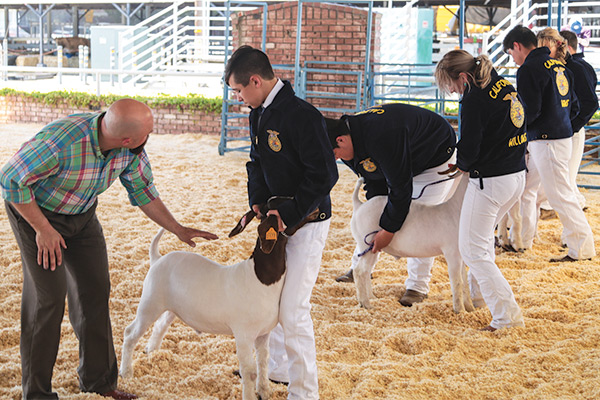
At the fair
When she started high school, Kate Amaro made a beeline for the goat program that her older sister Gina had helped launch.
“I saw so many great things come out of this program—the kids’ smile on their faces, just so many great things—that I thought, man, that is the program that I want to be a part of,” the younger Amaro said. “If it wasn’t for my sibling, I wouldn’t be here today, part of this amazing program, with these amazing kids right here.”
For spring 2022, Kate teamed up with fellow Willows junior Jose Fletes to raise Julio. Fletes, one of four special-education students in the program, impressed Amaro with his work ethic.
“He knows what he’s doing,” she said. “He’s getting in there, he’s cleaning those pens for me. He never complains about helping me at all. He’s always willing to work. I love Jose for that.”
The program’s reputation is such that when auction day rolls around, the locals open their wallets.
“We actually get quite a big crowd for all these special-needs kids,” Kate Amaro said. “People see all these kids’ faces and go, ‘We want to help them out.’ So on (the auction day), we really get the community involved, and I think that’s really fun and important.”
As for Fletes, he likes the work so much he made plans at last year’s auction to return.
“Probably next year,” Fletes said, “I’m going to get another goat.”





.svg.png)
