

Ask a farmer: Wheat in the winter
Winter 2025 California Bountiful magazine
Farmer grows staple in the offseason
Story by Caleb Hampton
Photo by Wynette Sills
Whether you are making bread, biscuits or cookies, the unique transformation that happens during baking, binding ingredients together and turning them into a fluffy loaf or pastry, is often thanks to wheat—and its key element, gluten.
The grain has been cultivated since before 9,000 B.C. Today, it covers more of Earth’s land than any other crop. In California, wheat is grown from the southernmost region of the Imperial Valley along the Mexican border all the way up to the Klamath River Basin stretching into Oregon.
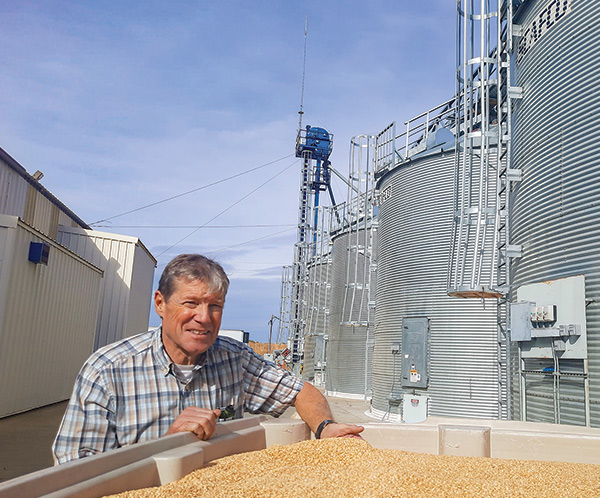
Ed Sills, owner of Pleasant Grove Farms in the Sacramento Valley, has been growing organic wheat for three decades. He plants about 200 acres of it each winter.
Like most California farmers, Sills grows wheat in the winter as part of a crop rotation with other field crops. For him, those other crops include rice, beans, corn and popcorn.
After harvesting his wheat, Sills sells it to small local mills that turn it into flour and other products. “We sell it to them as a whole grain and they take it from there,” Sills says.
From seed to flour
Sills sources wheat seeds from seed companies and plants them in November using a machine called a seed drill, spacing the plants 6 inches apart. The wheat is sustained by rain during the winter, with Sills irrigating the crop once in the spring. In June or July, he uses a combine harvester to harvest the crop. It is then cleaned, bagged and sent to local mills.
Many varieties
“There are lots and lots of wheats that are used for flour,” Sills says, each providing a unique flavor and texture. This year, Sills is growing a soft white wheat, a variety typically made into flour for cookies and other pastries, and a hard red wheat, which is mostly used for bread. The difference between all-purpose flour, cake flour, bread flour and semolina comes from the type of wheat used—classified as soft to hard. Whole-wheat flour includes the entire grain—bran, endosperm and germ.
Part of the rotation
Many farmers grow wheat as part of a yearly crop rotation with other field crops. California’s climate allows for wheat to be planted in the fall and harvested in spring, filling a gap between summer crops when fields might otherwise be left fallow. While wheat is a low-earning crop, growing it in the winter allows farmers to plant an additional crop and keep the soil healthy and fertile.
A global market
Like many agricultural commodities, wheat is bought and sold in the global market. In recent years, the wheat market has seen turbulent times resulting from Russia’s invasion of Ukraine, a major wheat supplier, which impacted the country’s exports and initially caused global prices to rise by almost 30%. Providing a niche product for small local mills, Sills says, “We’re somewhat insulated from the global market, but not totally.”
Diverse consumers
Humans aren’t the only species that likes to eat wheat. Sills sells about two-thirds of his wheat crop to mills that process it for animal feed, with the other third being made into flour for people to consume. In California, the most significant demand comes from the state’s large dairy sector. Sills sells some of his wheat to mills that process it for organic poultry farms.
Sticking together
Gluten is a protein in wheat flour that binds ingredients together, makes dough stretchy and helps it rise. “If you’re walking a wheat field that’s about ready to harvest, you can judge the protein content by rubbing a couple wheat heads in your hand, blowing the chaff away and putting it in your mouth,” Sills says. If the protein content is high, “the gluten will be like chewing gum.”





.svg.png)
